10 Cedar Swamp Road, Suite 2, Glen Cove, NY 11542


Ceramic crowns are metal-free, full-coverage restorations that rebuild the shape, strength, and look of a broken, worn, or heavily filled tooth. They suit patients in Glen Cove who need a durable, natural-looking repair, including after a root canal or on an implant. Dental Concepts helps you choose the right ceramic for the tooth.
At Dental Concepts, we combine modern materials and meticulous technique to restore teeth that are weakened, broken, or cosmetically compromised. Our goal is to deliver restorations that feel natural, function reliably, and blend seamlessly with the surrounding dentition. We emphasize careful diagnosis, conservative preparation, and communication so every patient understands their options.
Tooth enamel is remarkably strong, but it’s not invincible. Cavities, injury, extensive previous restorations, and the wear that comes from grinding or heavy bite forces can leave a tooth structurally vulnerable. In many of these cases, a simple filling isn’t enough to rebuild the tooth to a durable, long-term state.
A crown is a full-coverage restoration designed to restore the form, strength, and appearance of an injured tooth. Advances in ceramic materials mean crowns can now be fabricated without metal, delivering both excellent strength and a highly lifelike appearance that closely matches natural tooth structure.
We prioritize patient comfort and predictable outcomes. That means individualizing each plan to respect your functional needs and cosmetic goals while using materials and techniques that offer longevity and biocompatibility.
A crown becomes the preferred option when a tooth has lost a significant portion of its structure or when protection is necessary to prevent further damage. Understanding the specific cause of the damage helps us recommend the least invasive yet most reliable restoration for the situation.
Common scenarios that often call for a crown include teeth with large or failing fillings, fractures that compromise the tooth’s integrity, teeth treated with root canal therapy that need reinforcement, and replacement tooth roots (implants) that require a durable final restoration.
Crowns are also frequently used to improve the appearance of a tooth when conservative cosmetic measures are not sufficient—such as teeth with deep intrinsic staining, unusual shape, or wear that affects function. In each case, our focus is on restoring chewing efficiency and protecting the remaining tooth structure.
To repair and rebuild teeth that have extensive decay or structural damage
To replace or reinforce large existing fillings that no longer hold
To restore a dental implant with a natural-looking crown
To support a fixed bridge by covering the abutment teeth
To protect and strengthen teeth following root canal therapy
To improve the appearance and proportions of a single tooth
To address functional issues related to bite alignment or excessive wear

All-ceramic crowns are designed to replicate both the strength and optical qualities of natural enamel. Materials used today are engineered to transmit and reflect light in similar ways to real teeth, which helps crowns look honest and lifelike rather than flat or opaque.
Because modern ceramics are manufactured to withstand normal chewing forces, they can be used in many areas of the mouth with predictable long-term performance. Their metal-free composition also reduces the risk of visible dark margins at the gumline and minimizes potential tissue irritation for patients with metal sensitivities.
Ceramic crowns can often be prepared with more conservative tooth reduction than older metal-based systems, preserving more of the natural tooth. Additionally, they resist staining and maintain their color stability over time, which contributes to a consistently attractive result.
These aesthetic and biological advantages make ceramic crowns an excellent choice for patients who want a restoration that performs well while looking natural next to their existing teeth.
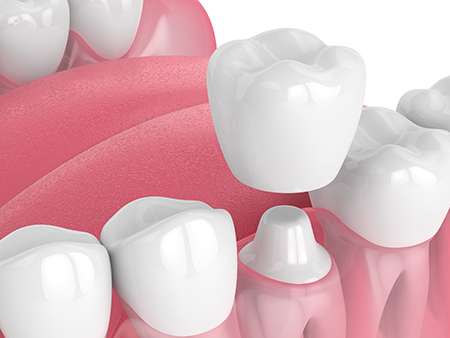
Not all ceramics are identical. The choice of material depends on the tooth’s location, the amount of bite force it will encounter, and the aesthetic demands of your smile. We evaluate these factors to recommend the most appropriate material for a durable and attractive restoration.
For front teeth, translucency and color-matching are often the top priorities; for back teeth, strength and wear resistance take precedence. In some cases a hybrid approach—using a very strong core material with a more aesthetic surface layer—can balance these needs.
Our team works with modern high-strength ceramics, each offering distinct advantages. We’ll explain the expected performance and visual characteristics of each option so you can make an informed choice that aligns with both function and appearance.
Lithium Disilicate porcelain crowns — renowned for a good blend of strength and translucency
Leucite-reinforced pressable porcelain — often chosen for highly aesthetic anterior restorations
Solid or monolithic zirconia — offers exceptional strength for posterior teeth under heavy load
High-translucent zirconia — improves aesthetics while maintaining increased durability
Choosing the best material is a collaborative decision. We’ll consider your oral habits, the condition of the opposing teeth, and your cosmetic expectations to arrive at a plan that balances longevity with natural aesthetics.

The treatment pathway typically begins with a detailed evaluation to confirm the tooth’s restorability and to discuss your goals. We use digital imaging and careful examination to plan the restoration while considering bite relationships and neighboring teeth.
During preparation, we gently shape the remaining tooth structure to create space for the crown while preserving as much healthy tooth as possible. We then capture a precise record of the prepared tooth—either using a digital scan or a physical impression—so the laboratory or milling system can fabricate a crown that fits accurately.
Temporary protection is provided when a final crown will be made off-site; when same-day digital milling is available and appropriate, we can complete the restoration in a single visit. Once the final crown is ready, we verify fit, shade, and bite, then secure the restoration with a reliable bonding technique before providing care instructions and follow-up recommendations.
Our practice combines clinical experience with contemporary technologies to deliver restorative work that serves both function and form. We stay current with advances in ceramic materials and laboratory protocols so our recommendations reflect the best options available.
Attention to detail—from shade selection to occlusal adjustment—helps ensure that your crown integrates comfortably with your bite and surrounding teeth. We emphasize conservative treatment planning and thorough communication so that the outcome fits your expectations and long-term oral health.
Whether you need a single crown to protect a compromised tooth or multiple restorations as part of a broader plan, our team is prepared to guide you through the process with steady, evidence-based care.
In summary, ceramic crowns offer a natural-looking, durable solution for restoring teeth that are broken, worn, or cosmetically unsatisfactory. If you’d like to learn more about how these restorations might benefit your smile, please contact us for more information.
While a dental filling is designed to replace a portion of a decayed or damaged tooth, a dental crown offers full coverage to restore the tooth’s entire outer surface. A well-fitting dental crown not only protects and strengthens the underlying tooth structure, but it also restores the tooth’s appearance and function.
The procedure for getting an all-ceramic crown is much like the procedure for getting any other type of crown. In all cases, the tooth needs to be prepared, an impression taken, and a permanent crown cemented into place. A single all-ceramic crown can typically be fabricated over the course of two visits. However, with CAD/CAM technology, a same-day crown can be fabricated from start to finish in a single visit. With the first approach, a temporary crown is typically worn until the second visit, when the permanent restoration is placed. As with every treatment plan, our office will explain your best options in care.
As the name implies, a temporary crown is only worn for a short time until the permanent crown is placed. A temporary crown is typically fabricated from durable tooth-colored dental acrylics. While designed to protect the underlying tooth between appointments, and until your new permanent crown gets placed, a temporary crown is also fabricated to look like a natural tooth and maintain the look of your smile.
While you should feel better having an attractive and functional tooth to restore your smile, your tooth may feel a little sensitive following treatment. This initial sensitivity will subside. We take great care to make sure your new restoration looks great, fits well, and your bite is perfect. However, we’re always happy to make any minor adjustments to ensure your comfort.
With some exceptions, teeth with root canal procedures are typically restored and protected from further damage with a full-coverage crown. Based on what’s best for your smile, our office will recommend the most appropriate restoration to maintain the health and longevity of your tooth following a root canal procedure.
A dental crown is a long-term restoration that, if properly cared for, can serve you well for many years to come. Once your new crown is placed, it requires the same brushing, flossing, and periodic checkups as your natural teeth. Avoid biting your fingernails and chewing on hard or sticky objects such as ice, pencils, or taffy, which can damage or loosen your crown. Remember, clenching and grinding your teeth puts excessive pressure on both natural teeth and dental restorations. Unless treated, this habit can compromise the longevity and integrity of your dental work, including crowns.
Although your new all-ceramic crown restores the tooth's strength, form, and function, you can still develop dental disease in the absence of proper care. To prevent gum disease and tooth decay, it’s essential to brush and floss as instructed and see our office for routine checkups, cleanings, and care.
How long a dental crown lasts depends on various factors, including your level of oral care, diet, and oral habits. While the standard answer is that dental crowns can last anywhere from 5 to 15 years, existing literature confirms that most dental crowns remain in place at 15 to 20 years.
At the office of Dental Concepts, we strive to provide the highest quality of care to address all your dental needs. Once we’ve had the opportunity to examine your smile, we can give you a clear picture of any dental issues that are present, along with a quote for how much treatment will be. The cost of dental crowns can vary a little, depending on the type of crown and its location. Our goals are to provide the highest quality of care and help patients begin treatment without additional financial stress or delay. We’re always happy to answer all your questions on dental insurance coverage, available financing, and payment plans.
Coverage for all-ceramic crowns depends on your dental insurance plan. Today, many dental plans provide some level of coverage for all-ceramic crowns. At the office of Dental Concepts, we work with patients to optimize their dental benefits and get the care they need to maintain healthy and beautiful smiles!
Ceramic crowns are full-coverage restorations made from metal-free porcelain or advanced ceramic materials designed to replicate the appearance and function of a natural tooth. Unlike traditional porcelain-fused-to-metal crowns, all-ceramic crowns eliminate metal substructures that can create dark margins at the gumline and can provide superior translucency for a more lifelike result. Their biocompatible composition reduces the risk of tissue discoloration and sensitivity for patients with metal allergies or sensitivities.
Material choice and fabrication technique influence both strength and esthetics, so modern ceramic systems are engineered to balance these properties depending on the clinical needs. Some ceramics emphasize translucency to mimic enamel while others prioritize core strength for posterior load-bearing teeth. The result is a range of options that allow clinicians to tailor restorations to each patient’s functional and cosmetic requirements.
A ceramic crown is typically recommended when a tooth has lost a substantial portion of its structure and a filling would not provide sufficient long-term strength or protection. Common scenarios include teeth with large or failing restorations, fractures that compromise the remaining tooth, and teeth that have undergone root canal therapy and therefore need reinforcement. Selecting a crown helps preserve the tooth by distributing biting forces over a wider area and protecting vulnerable tooth walls from further damage.
Crowns are also appropriate when conservative cosmetic treatments cannot correct intrinsic staining, irregular shape, or severe wear that affects function. In cases where preservation of as much natural tooth as possible is the priority, a clinician will evaluate whether a partial restoration (onlay) or a full-coverage crown best balances durability with conservation. The decision is made after a thorough clinical examination and discussion of functional needs and esthetic goals.
Several ceramic materials are commonly used for crowns, each offering a distinct blend of strength and esthetic properties. Lithium disilicate is favored for its attractive translucency and reliable strength for many anterior and some posterior applications, while leucite-reinforced ceramics are chosen when exceptional anterior esthetics are required. Zirconia is available in monolithic (solid) forms for exceptional posterior strength and in high-translucent formulations that improve appearance while retaining durability.
Clinicians may combine materials or use layered techniques—such as a strong zirconia core with an esthetic ceramic veneer—to achieve both function and lifelike appearance where indicated. Laboratory protocols, digital design, and milling systems further influence the final restoration’s fit and optical characteristics. Your dentist will review the specific advantages of each option in light of your occlusion, opposing teeth, and cosmetic expectations.
The crown process begins with a comprehensive evaluation that typically includes clinical examination and digital imaging to determine restorability and to plan the restoration. During the preparation appointment the dentist gently shapes the remaining tooth structure to create space for the crown while preserving as much healthy tooth as possible, and then records an impression or digital scan for fabrication. When a laboratory-made crown is required, a temporary restoration protects the tooth until the final crown is ready; when same-day milling is appropriate, the restoration can sometimes be completed in a single visit.
At the placement appointment the final crown is tried in to verify fit, occlusion, and shade, then bonded or cemented using an appropriate adhesive technique to ensure stability. Your practitioner will make precise occlusal adjustments so the restoration integrates smoothly with your bite and surrounding teeth. Aftercare instructions and a follow-up plan are provided to monitor fit and function and to address any sensitivity that can occur as the mouth adapts to the new restoration.
Yes, ceramic crowns can be used on both front (anterior) and back (posterior) teeth, but the material selection and design differ based on functional and esthetic demands. For front teeth, translucency, color matching, and surface texture are primary considerations to achieve a natural appearance; materials with higher optical qualities are often selected for these cases. For back teeth, where chewing forces are greater, clinicians often prioritize higher-strength ceramics such as monolithic zirconia or reinforced lithium disilicate to withstand occlusal load and reduce the risk of fracture.
A tailored approach allows the dentist to choose a ceramic that provides the necessary strength in posterior areas while delivering the desired smile esthetics in anterior regions. In some situations a hybrid solution—combining a strong core with an esthetic outer layer—can provide the best of both worlds and is selected when both appearance and durability are essential. The final recommendation is based on occlusion, parafunctional habits, and the condition of opposing teeth.
Ceramic crowns are designed for long-term function and can last many years when proper care and maintenance are provided, but longevity varies depending on multiple factors. Material type, the extent of the original tooth damage, the quality of the bond between tooth and crown, and the patient’s oral habits—such as grinding or clenching—significantly influence lifespan. Regular dental checkups, good oral hygiene, and prompt attention to any changes in fit or comfort also contribute to predictable, durable outcomes.
Proper occlusal management and the use of protective devices such as night guards for patients with bruxism reduce stress on restorations and can extend service life. The clinical technique used during preparation and cementation, as well as the precision of laboratory or digital fabrication, impacts fit and marginal integrity over time. Our team evaluates these factors carefully when planning a restoration to maximize longevity while meeting esthetic and functional goals.
Caring for a ceramic crown closely mirrors the maintenance of natural teeth and includes routine brushing with a fluoride toothpaste and daily interdental cleaning with floss or interdental brushes. Maintaining excellent oral hygiene reduces the risk of decay at the crown margins and helps preserve the health of adjacent gums and teeth. Regular professional cleanings and exams allow the dentist to monitor the crown, check contacts and margins, and perform adjustments if wear or changes in occlusion develop.
Avoiding habits that put concentrated force on restorations—such as chewing ice, opening packages with your teeth, or biting hard objects—helps prevent chipping or fracturing. If you have a history of grinding, sleeping with a custom night guard can protect crowns and natural teeth from excessive wear. Report any sensitivity, loosening, or changes in bite promptly so the practice can address potential issues before they progress.
While ceramic crowns are safe and effective, potential complications can include sensitivity after preparation, marginal leakage if fit is imperfect, chipping or fracture under excessive force, and occasional need for endodontic treatment if the tooth’s nerve becomes irritated. Proper diagnostic assessment and conservative preparation minimize the risk of nerve trauma, and precise fabrication and bonding reduce the likelihood of marginal gaps that could permit decay. Material selection and occlusal adjustment are important controls to limit wear to opposing teeth and to prevent premature failure.
Gum tissue may require careful management to ensure healthy margins and esthetic results, and the dentist may make periodontal recommendations if gum health is compromised. Infrequently, a crown may need replacement due to wear, recurrent decay, or aesthetic changes, and routine follow-up visits help identify such needs early. Patients who have specific concerns about bite, sensitivity, or appearance should discuss them with their clinician so a tailored plan can address risk and expectations.
Ceramic crowns are commonly used as final restorations on dental implants and can provide highly natural esthetics when mounted on a properly designed abutment. Implant crowns may be screw-retained or cement-retained depending on access, retrievability needs, and implant position, and modern ceramic materials can be adapted to either workflow. For bridges, ceramic materials are used to fabricate pontics and connector zones, but careful design and material selection are essential to ensure strength across the span.
When planning implant-supported or multiunit restorations, the dentist evaluates occlusion, cantilever forces, and connector geometry to select ceramics that balance esthetics with structural demands. Laboratory communication and digital planning enhance fit and emergence profile on implants, improving long-term tissue health and function. Proper maintenance and periodic evaluation are important to detect any complications at the implant-restoration interface.
We begin with a comprehensive clinical assessment that reviews the tooth’s structural needs, the functional demands of your bite, and the esthetic goals you wish to achieve, and we integrate digital imaging and shade-matching techniques into the planning process. The team discusses the advantages and limitations of candidate materials—such as lithium disilicate, leucite-reinforced porcelain, and various zirconia formulations—and explains how each option performs in the specific location of your mouth. This collaborative approach ensures the selected material aligns with both strength requirements and the visual characteristics of adjacent teeth.
Shade selection is performed using natural light and calibrated shade guides, and where necessary we use photographs and digital tools to communicate precise color and translucency to the laboratory or milling system. Occlusal considerations and opposing dentition are reviewed to confirm that the chosen material will withstand functional forces without compromising appearance. Patient preferences and long-term maintenance plans are part of the final recommendation so the restoration meets expectations for both form and function.

10 Cedar Swamp Road, Suite 2
Glen Cove, NY 11542
Mon, Tues: 10am - 8pm
Wed: 9am - 8pm
Thurs: 10am - 8pm
Fri: 10am - 8pm
Sat: 10am - 8pm
Sun: By Appointment Only
*Patients can be accommodated outside normal office hours.*