10 Cedar Swamp Road, Suite 2, Glen Cove, NY 11542


An oral exam is a thorough check of your teeth, gums, bite, and soft tissues, with x-rays when needed, to catch problems early and guide your care. It helps new and returning patients, including children, teens, and adults. Dental Concepts in Glen Cove explains findings in plain language and outlines clear next steps.
At the office of Dental Concepts, we take a preventive-first approach to dental care: thoughtful oral exams are the cornerstone of keeping your smile healthy and resilient. Regular visits give us the chance to identify small problems before they become larger ones, to reinforce good habits, and to tailor recommendations based on your unique health history and lifestyle. Our team combines modern diagnostic tools with patient-centered communication so every visit is practical, efficient, and focused on lasting results.
Your initial oral exam is the foundation of your personalized care plan. We begin by reviewing your medical and dental histories and asking targeted questions about any symptoms, discomfort, or concerns you may have. That conversation helps us prioritize the exam and ensures we address issues that matter most to you.
Next comes a careful clinical evaluation of your teeth, gums, bite, and the soft tissues of the mouth. We check for early signs of decay, inflammation, or abnormal tissue changes and assess how your teeth come together when you bite. Attention is also paid to habits like clenching or grinding and to any areas that show excessive wear or stress.
Diagnostic images are recommended as needed to give us a complete picture beneath the surface. These x-rays reveal the roots, bone levels, and structures that are invisible during a visual inspection. Based on what we find, we’ll explain any recommended follow-up, outline sensible options, and answer your questions so you can make informed decisions about your care.

Oral health is closely linked to general health. Conditions that begin in the mouth can influence other systems of the body, and systemic diseases often show early signs in oral tissues. During an exam, we remain alert for these connections so that oral findings can prompt timely conversations about broader health concerns.
Researchers continue to uncover relationships between periodontal inflammation and conditions such as cardiovascular disease, diabetes, and respiratory problems. While the nature of these links is complex, routine dental exams and consistent oral care can help reduce inflammation and support overall health.
Conversely, many systemic illnesses and medications produce oral symptoms—dry mouth, unusual sores, or gum changes—that can affect daily function and increase risk for cavities or infections. When we detect such signs, we discuss them with you and, when appropriate, recommend coordination with your medical provider to ensure a holistic approach to your health.
Professional cleanings are more than cosmetic — they remove hardened plaque and bacteria from places you can’t reach at home. This reduces the chance of cavities and gum disease and helps maintain the supporting structures around the teeth. Regular preventive visits give our team the chance to monitor changes and intervene early when necessary.
During your hygiene visit we’ll also review and demonstrate home care techniques tailored to your needs, including brushing, flossing, and the use of interdental aids. Small changes in technique or routine products often deliver significant improvements when they match your individual anatomy and risk profile.
Prevention is especially important for growing mouths. For children and teens, routine exams allow us to track dental development, recommend age-appropriate preventive measures, and determine whether orthodontic evaluation will be beneficial. For adults, maintenance visits focus on preserving function and detecting issues while they’re easier to treat.
Our goal is to make preventive care straightforward and effective so that patients can enjoy functional, comfortable smiles for a lifetime rather than reacting to problems after they arrive.
Modern dental imaging is a key part of a thorough oral exam because it shows structures that a visual inspection cannot. Digital radiographs reveal cavities between teeth, the health of roots, bone levels around teeth, and the position of impacted or developing teeth. These images enhance diagnostic accuracy and guide treatment planning.
Digital x-rays use lower radiation doses than older film techniques and provide images instantly. That immediacy helps us explain findings clearly during your visit and allows us to compare images over time to track changes. The ability to store and share these files securely also improves coordination of care when specialists are involved.
Beyond standard 2D images, three-dimensional imaging (when clinically indicated) offers detailed views of jaw anatomy and spatial relationships between teeth and other structures. Such data are especially useful for complex diagnoses and for planning surgical procedures with a high degree of precision.
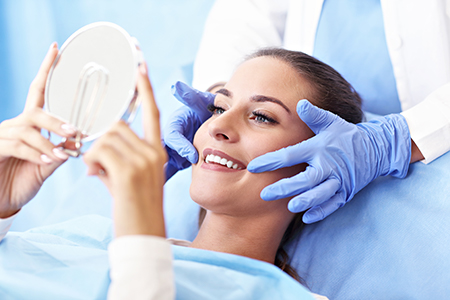
We select the type of image based on the diagnostic question at hand. For routine care, small, targeted images are often sufficient; for planning or complex treatment, broader views or three-dimensional scans may be required. Choosing the right image minimizes exposure while maximizing clinical value.
Periapical x-ray - Focuses on a single tooth from crown to root and is helpful for evaluating infections, root health, and bone near the tooth.
Bitewing x-ray - Captures the upper and lower crowns in one area and is particularly useful for detecting decay between teeth.
Full mouth series - A comprehensive set of images that provides a complete view of the teeth and surrounding bone when a full assessment is needed.
Panoramic film (panorex) - Offers a broad view of the jaws and developing or impacted teeth, useful for treatment planning and screening.
Cephalometric film - Used mainly in orthodontic planning, this profile image helps evaluate facial growth and jaw relationships.
When three-dimensional imaging is recommended, it is for specific clinical reasons — for example, to understand complex anatomy before placing an implant or to evaluate a suspected pathology. These scans provide a level of detail that supports safer and more predictable treatment outcomes.
We balance the diagnostic benefits of each imaging option with the principle of ALARA (as low as reasonably achievable) for radiation exposure. If an image is recommended, we’ll explain why it’s needed and how it will assist in your care.
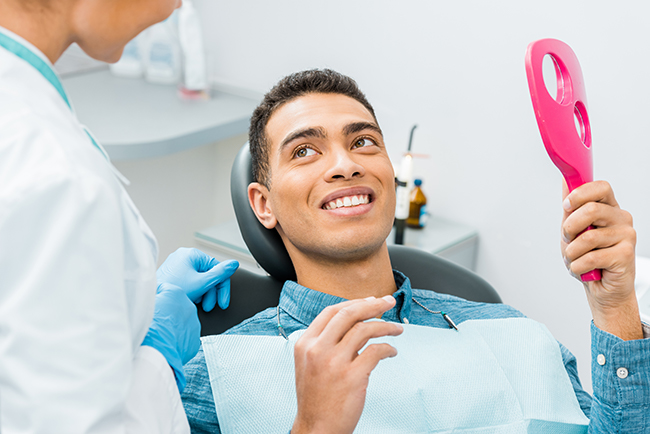
Preventive exams and the right imaging at the right time form a practical, evidence-based strategy for protecting oral health. The office of Dental Concepts aims to make each exam informative and reassuring: we’ll explain findings in plain language, outline clear next steps, and work with you to preserve both function and appearance. If you’d like more information about what to expect during an oral exam, or to schedule a visit, please contact us for details.
Yes. We always welcome new patients and their families for care. Feel free to give us a call or reach out to us online to schedule a first visit or for any additional information on our office. We look forward to hearing from you!
Routine dental checkups and professional cleanings help ensure your smile remains in tip-top condition and that any developing problems receive the prompt care they require. While it's a good idea to schedule a checkup and cleaning twice a year, longer or shorter intervals between routine visits depend on your specific needs.
We understand that life gets complicated and busy, and for various reasons, you haven't been able to get to the dentist for care. Don't worry; it's always a good time to get back in touch with the health of your smile.
At Dental Concepts, we offer skilled and compassionate care to address a wide range of dental needs. Whether you need a simple checkup and cleaning, restorations, periodontal treatment, root canal therapy, or the replacement of missing teeth to get your smile back into shape, we provide precise, gentle, stress-free treatment to give you a smile that is as beautiful as it is healthy.
Give us a call today; we're happy to address all your questions and concerns about getting your smile back in tip-top condition.
For pregnant women, practicing good oral care and seeing the dentist to maintain a healthy smile is considered an important component of prenatal care. Researchers have found that pregnancy not only increases the risk of oral health problems, but these problems may also lead to pregnancy complications. At the office of Dental Concepts, we provide the skilled and compassionate care required to help expectant mothers keep their teeth and gums in tip-top condition. While certain procedures are not recommended during pregnancy, we provide the necessary care and take all the necessary precautions required.
Thanks to advances in modern dentistry, teeth that have been affected by a range of imperfections or that have sustained damage from trauma or dental decay can be restored to produce a naturally beautiful looking and functional smile.
As skilled and experienced providers of care, our office can effectively improve and enhance the appearance of teeth that are stained, discolored, misshapen, chipped, fractured, gapped, crowded, or broken down due to dental decay. At the office of Dental Concepts, we offer a comprehensive selection of the leading-edge cosmetic solutions from teeth whitening procedures, dental bonding, tooth-colored fillings, and veneers, to prosthetic solutions and dental implants to rebuild complete and beautiful smiles.
Contact our office to learn more about the many ways we can help you create the smile you've always wanted.
If you're visiting Dental Concepts for the first time, it is helpful that you contact your former dental office and have your records sent over to us. Make note of any problems you may have so that you can discuss them with your dentist.
To provide efficient service, we ask you to please bring your insurance card, an ID, plus any referral slips or diagnostic records given to you by another office. If you are taking medications, please note or make a list of what they are as you will need to provide that information.
Yes! We assure you that both you and your family will be in good hands at the office of Dental Concepts.
We do our best to make sure every patient who steps into our office for care is put at ease. We provide precise and gentle care and our skilled, compassionate team strives to make every visit stress-free. You can rest assured that your smile is in the best of hands and that we are doing all we can to ensure your comfort throughout every procedure. While we always take the time to explain every step in care, feel free to ask us any questions about local anesthesia and methods of dental sedation.
At the office of Dental Concepts, we strive to provide the highest quality of care to address all your dental needs. Once we've had the opportunity to examine your smile, we can give you a clear picture of any dental issues that are present, along with a quote for what the cost of treatment will be. The cost of care all depends upon the extent and complexity of issues affecting the health or appearance of your smile and the types of procedures that are required. Our goal is to make dental care more affordable so that you can begin treatment without any additional stress or delay.
Keep in mind that with routine dental checkups and periodic care, we can help prevent dental disease while treating emerging problems early in their onset to avoid larger issues and more expensive care down the road.
Routine dental checkups and preventive care procedures may be covered under your dental insurance plan requiring little to no out-of-pocket expense. We invite you to check our financial information page or give us a call to find out if our office participates with your plan, and if you have any other questions about dental insurance, dental savings plans, forms of payment, or financing options. We welcome your inquiries and do our best to help you begin care without additional stress or delay.
If you've lost a tooth due to injury, decay, gum disease, or any other reason, we recommend dental implants to replace missing teeth. Dental implants come the closest to replicating the look, feel, and function of your natural teeth.
Absolutely! Both flossing and brushing regularly are equally important to maintain your oral health. While brushing cleans the surface of your teeth, flossing cleans in between them. Flossing is important to prevent plaque buildup, which can cause gums to recede and lead to periodontal disease.
Even if you have dentures, it is still necessary to see a dentist! Dental checkups help ensure that your dentures are comfortable, fitting properly, and that there are no other problems. Beyond assessing your dentures, our dentist will also perform a thorough examination of the jawbone, and surrounding soft tissues both inside the mouth, the face, and neck, to confirm that you remain in good oral health.
Emergency dental care is a service we hope you'll never need- but if you do, the office of Dental Concepts is here for you!
Whether you're suffering from a chipped tooth, toothache, or any problem affecting your oral health, you can be sure to get the prompt attention and compassionate care you require at our office. Patient care and comfort are our top priorities, and we offer a comprehensive range of the most advanced services to address a broad spectrum of dental needs.
While the pain of a toothache is one of the more common reasons that patients come to our office for emergency dental care, we also promptly treat emergencies that are not necessarily painful like crowns that have been dislodged and broken dentures that leave embarrassing gaps in one's smile.
You can rest assured that your oral health is in the best of hands at our office. We'll quickly determine exactly what's wrong, explain your treatment options, and then provide the precise and gentle care you require to alleviate your discomfort and get you back on the path to oral health and wellness.
Your health and comfort are our top priorities. If your dental emergency is painful, if it affects the appearance of your smile, or if you suspect that an infection is present, our office will make every effort to see you as soon as possible for care.
At the office of Dental Concepts, we welcome patients of all ages for care and offer a comprehensive range of services designed to help every member of your family maintain a beautiful and healthy smile. Whether you or a loved one needs a routine checkup and cleaning, fillings, same-day crowns, a cosmetic smile makeover, the replacement of missing teeth or require the services of a skilled and compassionate emergency dentist, you can rely on our office for the highest quality care.
For more information on our office and the many services we provide, or to schedule an appointment for care, give us a call today.
We begin by reviewing your medical and dental histories and asking targeted questions about symptoms, medications and any concerns you may have. That conversation helps us prioritize the examination and focus on issues that matter most to you. We also document risk factors such as tobacco use, systemic conditions or certain medications that can affect oral health.
Next, we perform a careful clinical evaluation of your teeth, gums, bite alignment and the soft tissues of the mouth. This includes checking for early decay, gum inflammation, abnormal tissue changes and signs of wear from habits like clenching or grinding. When indicated, we recommend diagnostic images to view roots and bone and to complete the assessment.
The frequency of routine exams is individualized based on each patient's oral health, risk factors and treatment history. For many patients, a six-month recall is effective for monitoring hygiene and catching early disease, but some people benefit from more frequent visits while others need less frequent monitoring. We determine the appropriate interval during your visit and adjust it as your needs change.
Regular exams allow early detection and preventive care, reducing the likelihood of more complex treatment later. They also provide opportunities to update imaging, review home care and coordinate with medical providers when oral findings suggest broader health concerns. Keeping a consistent schedule helps maintain long-term oral health and function.
Dental x-rays reveal areas that cannot be seen during a visual exam, such as interproximal decay, root health, bone levels and impacted teeth. These images improve diagnostic accuracy and help us plan appropriate, minimally invasive care. We recommend only the images needed to answer specific clinical questions.
Digital technology reduces radiation and provides immediate results that can be reviewed with you during the visit. We follow the ALARA principle and explain why each image is indicated so you can understand how it supports your care. When three-dimensional imaging is necessary, it is reserved for complex cases like implant planning or assessing complicated anatomy.
Many systemic conditions and medications produce oral signs such as dry mouth, unusual sores, mucosal changes or altered gum health, and these can be detected during routine exams. Because the mouth reflects aspects of general health, we remain alert for patterns that warrant further evaluation or medical collaboration. Documenting these findings allows us to advise patients and, when appropriate, communicate with medical providers for coordinated care.
Periodontal inflammation has been associated with conditions like diabetes and cardiovascular disease, and managing oral inflammation can contribute to overall health. While the relationships are complex, early detection and consistent preventive care reduce oral inflammation and the risk of related complications. We discuss observable findings in plain language and recommend follow-up steps that align with your overall health needs.
Before your appointment, compile an up-to-date list of medications, recent medical changes and any symptoms or concerns you want to discuss. Bringing previous dental records or recent x-rays, if you have them, can help us review changes over time. If you have anxiety or special needs, let us know in advance so we can discuss accommodations to make the visit comfortable.
You do not need special preparation for a routine exam, but arriving with cleaned teeth and avoiding heavy food right before the visit helps with the clinical evaluation. If specific imaging or procedures are planned, our team will provide any necessary pre-visit instructions. Clear communication before the visit ensures a focused and efficient appointment.
Digital x-rays use far lower radiation doses than traditional film techniques and produce instant images for more efficient diagnosis. We adhere to the ALARA principle, using the minimum exposure necessary to obtain clinically useful information. Protective measures such as lead aprons are available when appropriate and we only order imaging when it is justified by the exam.
Because digital images are stored electronically, we can compare them over time to detect subtle changes and securely share them with specialists when needed. The immediate availability of images also helps us explain findings during your visit and involve you in treatment planning. If you have specific concerns about radiation, please discuss them with our team so we can address them directly.
Preventive care begins with a personalized risk assessment that considers factors such as oral hygiene habits, diet, medical history and previous dental disease. Based on that assessment, we recommend targeted home care techniques, product choices and recall intervals that fit your anatomy and lifestyle. Education and hands-on demonstrations during hygiene visits help patients adopt practical habits that yield measurable improvements.
Preventive strategies are dynamic; we monitor responses to recommendations and adjust interventions as your situation changes. For patients with specific needs—like high decay risk, gum disease or dry mouth—we offer tailored therapies and closer follow-up to prevent progression. Our goal is to preserve function and comfort through simple, evidence-based measures rather than reactive treatment.
We select imaging based on the diagnostic question at hand; common types include periapical films to evaluate a single tooth and its root, bitewings to detect interproximal decay, and panoramic images to view overall jaw relationships. Cephalometric films are used mainly in orthodontic planning, while three-dimensional scans are reserved for complex surgical planning or when detailed anatomy is critical. Choosing the right image balances diagnostic value with minimizing exposure.
Targeted images provide specific clinical insights—for example, assessing bone near a tooth suspected of infection or checking the position of an impacted tooth. We explain why a particular image is recommended and how it will influence any proposed follow-up or treatment. This ensures images are used purposefully to improve outcomes and treatment predictability.
Children's exams emphasize growth and development, monitoring tooth eruption, jaw relationships and the timing of permanent teeth. We use age-appropriate communication and preventive measures such as fluoride guidance, sealants when indicated, and habits counseling to support developing mouths. Early exams also allow us to identify issues that may benefit from timely orthodontic evaluation.
Visits for younger patients often include education for parents about home care, diet and injury prevention to reduce common childhood problems. We adapt clinical techniques to make exams as comfortable and nonthreatening as possible and recommend recall schedules based on each child's risk. Coordinating care with pediatricians or specialists is done when broader health or developmental concerns are identified.
If you experience acute pain, persistent swelling, uncontrolled bleeding, sudden mobility of a tooth or trauma to the mouth, schedule an appointment promptly rather than waiting for your next routine visit. New or nonhealing sores, unusual numbness or any sudden changes in chewing or speech also warrant timely evaluation. Quick assessment helps us prevent complications and address problems while they are more easily managed.
Signs of infection such as fever, spreading swelling or difficulty breathing require urgent attention and may necessitate coordination with medical services. If you have systemic health conditions or are taking medications that affect healing, inform us when you call so we can prioritize and plan your care appropriately. Our team will advise on next steps and help determine whether same-day evaluation is needed.

10 Cedar Swamp Road, Suite 2
Glen Cove, NY 11542
Mon, Tues: 10am - 8pm
Wed: 9am - 8pm
Thurs: 10am - 8pm
Fri: 10am - 8pm
Sat: 10am - 8pm
Sun: By Appointment Only
*Patients can be accommodated outside normal office hours.*